Built for P&C, across the full value chain.

Carriers, MGAs and InsurTechs. Underwriting to claims, product to distribution. Delivered on the platforms the industry runs on.

Six builds from the insurance practice.

Production-grade software, live and accessible. Each one solves a specific problem in P&C operations.

Live demo

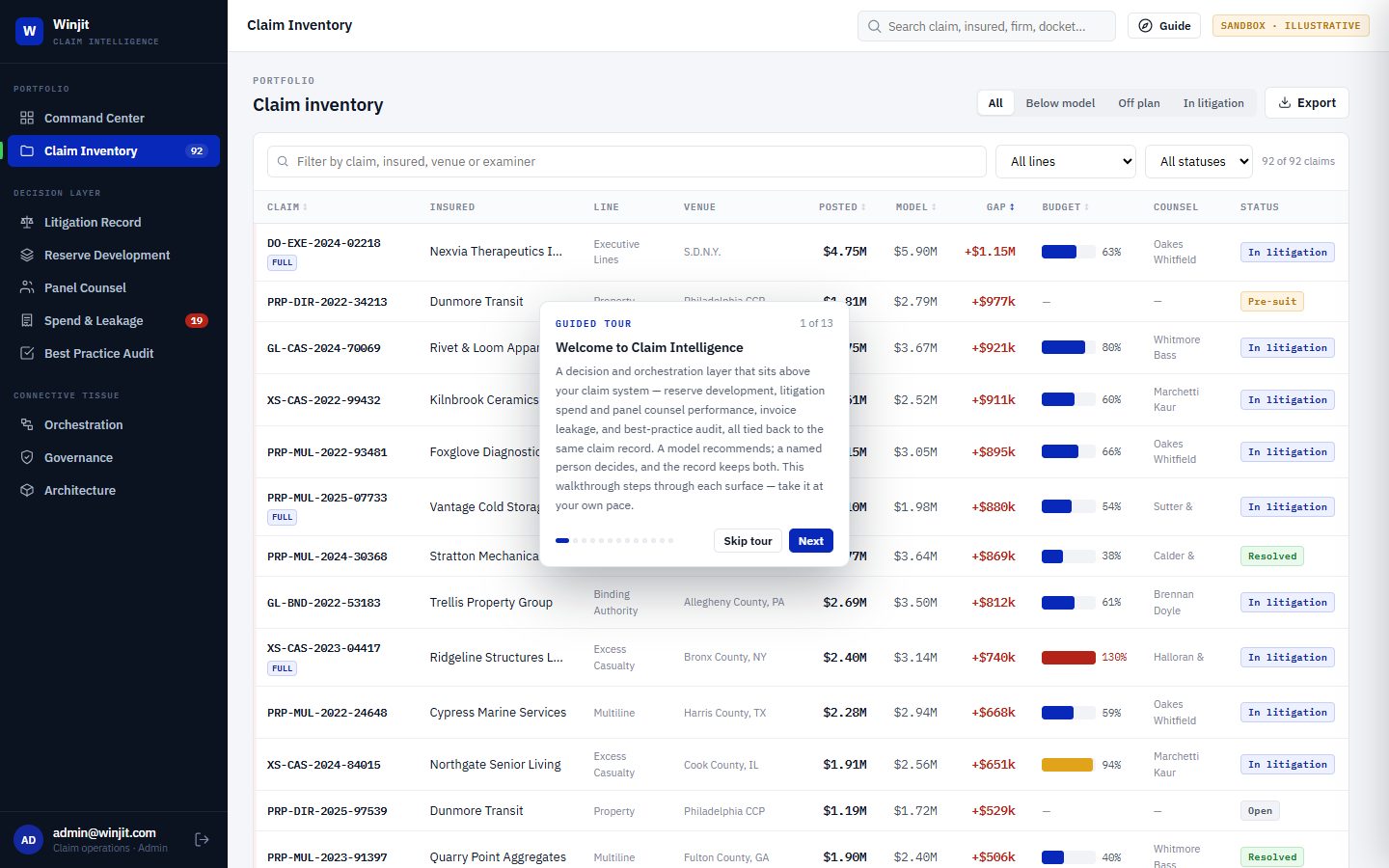
Claim Intelligence Layer

Specialty casualty claim operations, from command centre to reserve development.

What it does

A full-stack claims intelligence platform for specialty casualty. Claim inventory, decision layer, litigation record, reserve development, panel counsel oversight, spend and leakage analytics, and a best-practice audit layer, all connected and governed. Built for a claims operation that needed command-level visibility across a complex book.
Try the demo (opens in a new tab)
Live demo

Underwriting Data Workbench

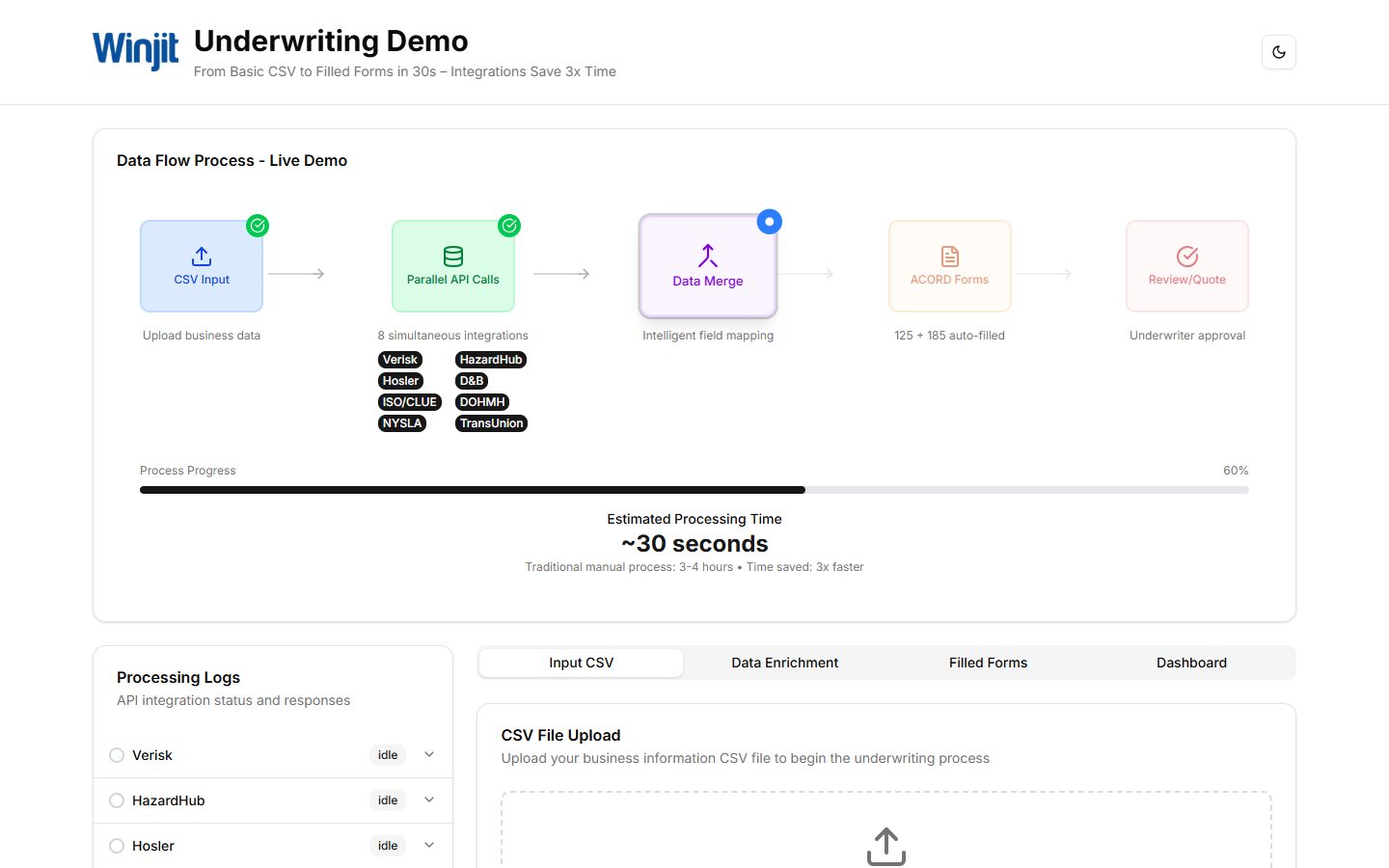
Eight data sources, one underwriter decision, thirty seconds.

What it does

A commercial property underwriting tool that takes a CSV of business data and runs eight simultaneous API integrations (Verisk, HazardHub, D&B, ISO/CLUE, DOHMH, NYSLA, TransUnion and Hosler), then auto-fills ACORD 125 and 185 forms with the enriched data and a risk summary the underwriter acts on. Social media image analysis included. Traditional manual process: three to four hours. With the workbench: thirty seconds.

Try the demo (opens in a new tab)
Live demo

StateLaunch

Quoting and rating configuration outside the core system.

What it does

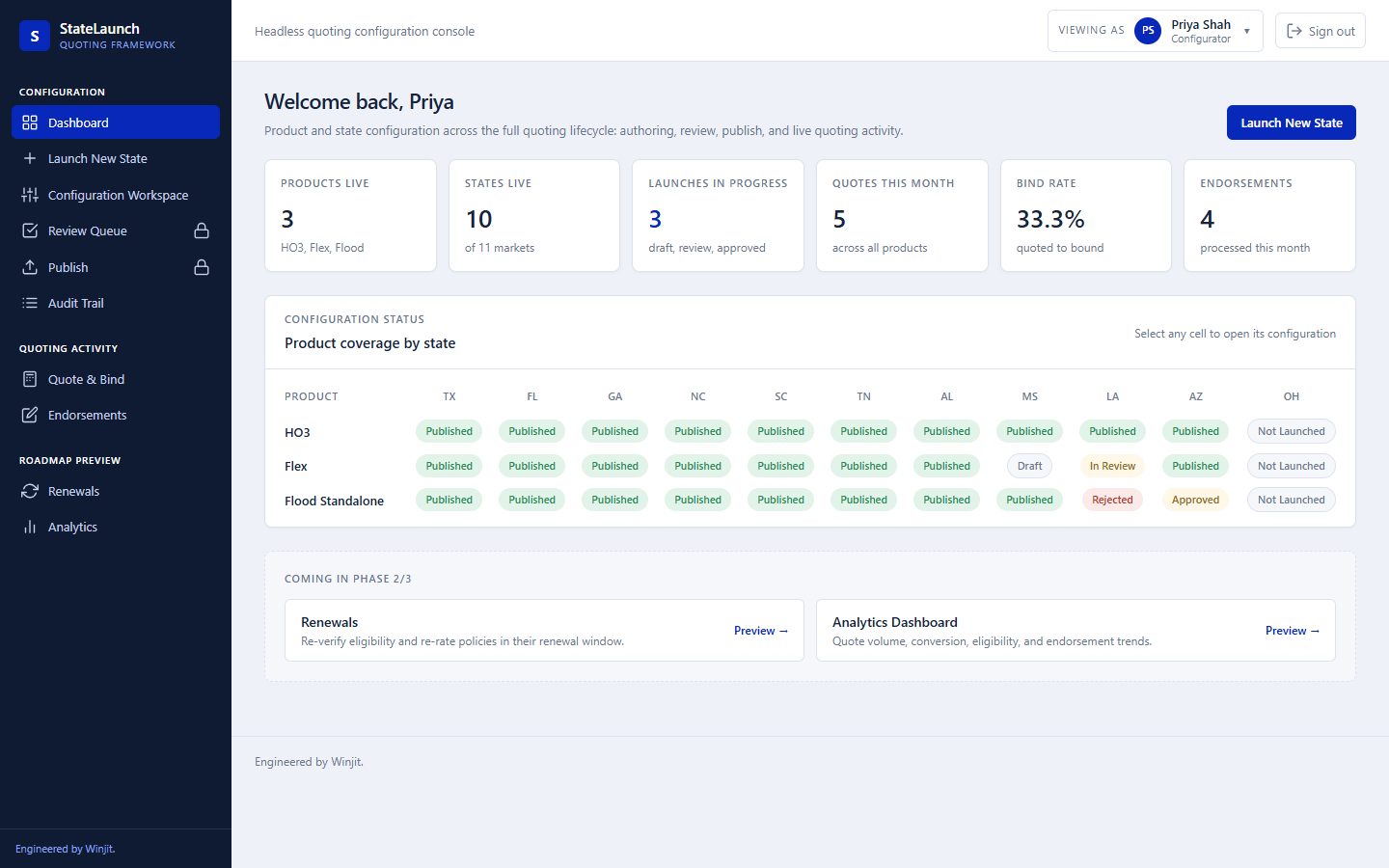
A headless quoting configuration framework for home insurance carriers and MGAs. Product, state, question set, eligibility rules and rating logic are authored, versioned, reviewed through a maker-checker workflow and published without touching the carrier's policy administration system. Quote, bind and endorse against versioned logic the PAS never has to store. Built for carriers whose product velocity was constrained by the pace of a core system change.

Try the demo (opens in a new tab)
Live demo

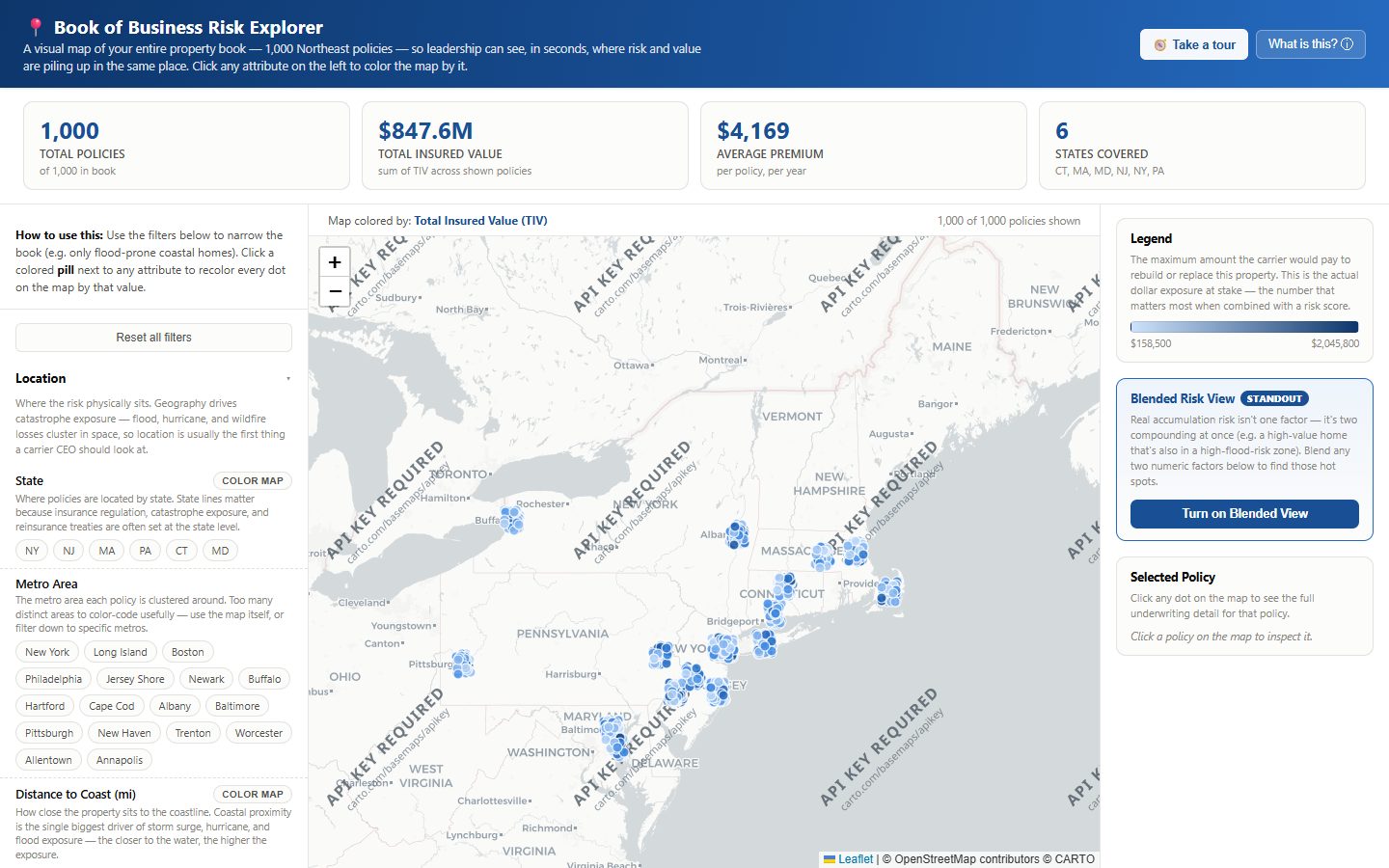
Book of Business Risk Explorer

Portfolio risk visible to leadership in seconds, not actuarial reports.

What it does

A visual portfolio intelligence tool for carrier leadership. Maps a full book of property policies geographically, lets leadership filter by state, property type, risk score, claims history and financials, and blends two risk factors to surface accumulations, such as high-value homes in flood-risk zones, for example. The purpose: a CEO who does not know what a HazardHub flood score is can see in thirty seconds that a third of the book sits within five miles of the coast.

Try the demo (opens in a new tab)
Live demo

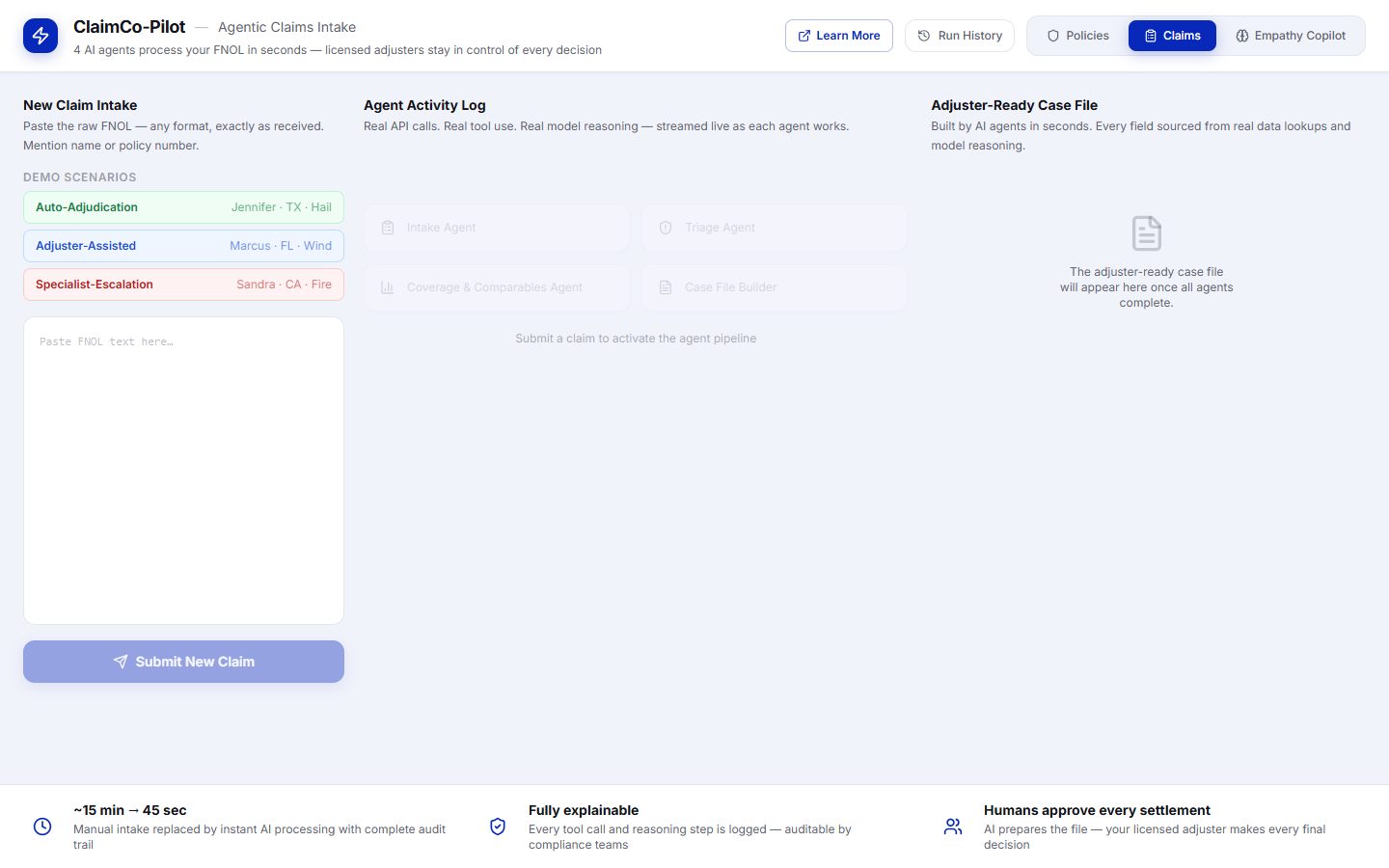
ClaimCo-Pilot

Agentic FNOL intake, licensed adjusters on every decision.

What it does

An AI-powered claims intake system where four agents process a first notice of loss in seconds, with empathy-guided call scripts surfaced for the adjuster on complex cases. The agents handle structured intake, triage and routing. A licensed adjuster controls every decision. Built for a claims operation where FNOL volume had outgrown the team's capacity without the option to hire at pace.

Try the demo (opens in a new tab)
Live demo

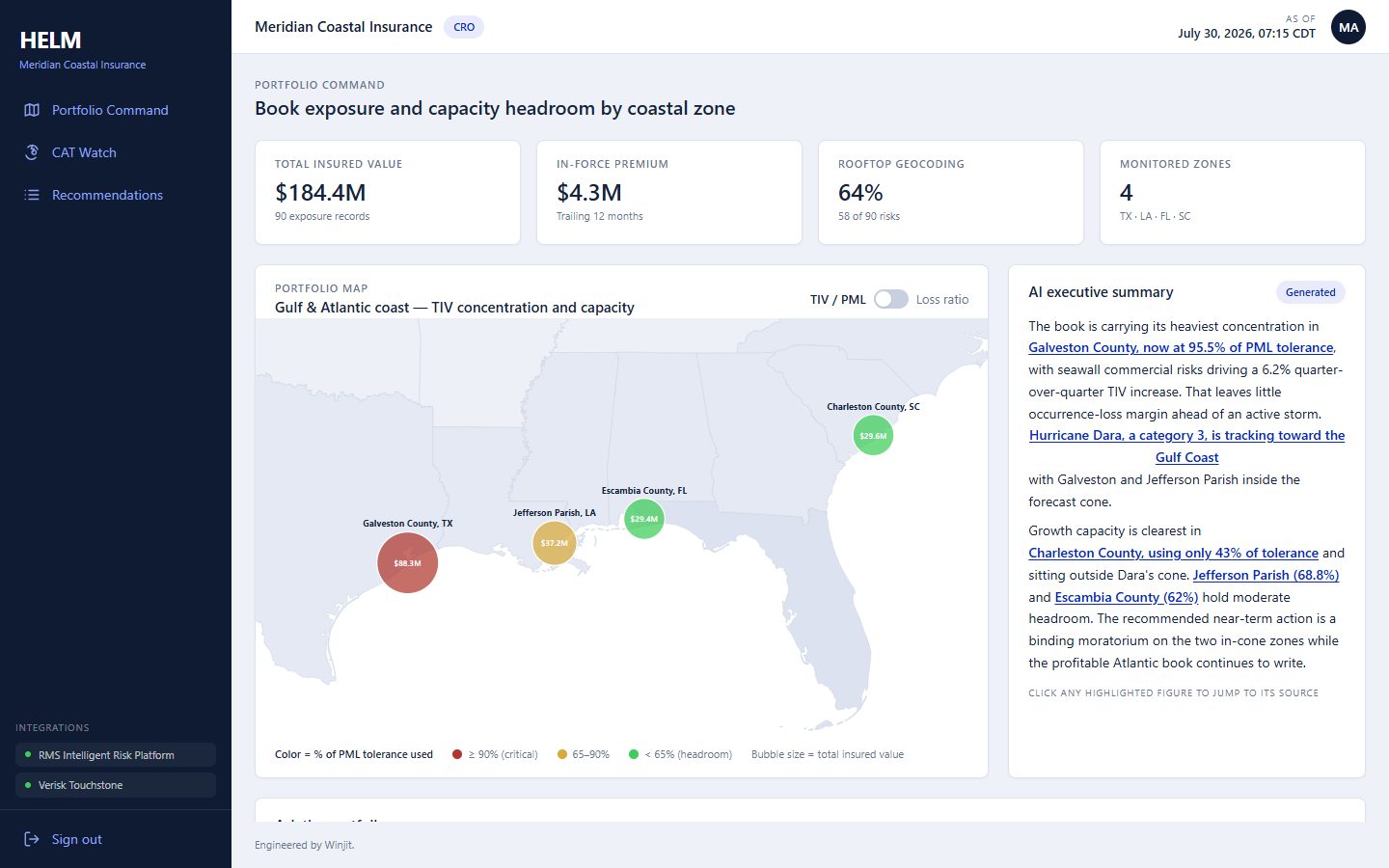
HELM: Coastal Exposure Management

Exposure data connected to commercial action for a coastal carrier.

What it does

A risk and exposure management platform built for Meridian Coastal Insurance and operated by the Chief Risk Officer. Connects the carrier's exposure data to the commercial decisions that follow from it: concentration limits, reinsurance attachment, underwriting restrictions and portfolio action. Built for a coastal carrier whose exposure was growing faster than its ability to see it clearly.

Try the demo (opens in a new tab)

What governs software in this industry.

State insurance departments

Product filings, form approvals and rate applications are per-state, per-line. Software that changes underwriting logic or pricing must account for the filing it affects.

NAIC model guidance

The NAIC has published model bulletins covering the use of external data and algorithms in underwriting and rating. AI features touching a coverage or pricing decision are built against those expectations.

Algorithmic underwriting scrutiny

State regulators are examining whether AI-assisted underwriting produces discriminatory outcomes. The audit trail and governance that covers a coverage decision is not optional.

Policyholder data

State consumer privacy laws apply to policyholder data, and insurance-specific data handling obligations layer on top. Offshore delivery of software touching that data is a question a compliance officer will ask.

Questions carriers and MGAs ask before engaging.

No engagement touches policyholder data outside the controls covered on AI Governance and Security and Compliance: model controls, audit trail and enforced human gates on one side, code security and regulatory posture by vertical on the other. Policyholder data stays in the carrier’s environment by default, whoever is working on it. Engineers work through access scoped to the systems the engagement requires, and any processing outside the client environment is agreed in writing before work starts.

Maker-checker workflows and change history are built into product and rating configuration by default. It is the same audit trail a state insurance department review expects, not a report assembled after the fact.

Model inputs, decision paths and outcomes are logged and reconstructable, built to the standard covered under AI Governance and the NAIC model guidance referenced above.

Every US insurance programme is run from Winjit's New York office by a named engagement lead, who is the client's day-to-day contact. The engineering team in India overlaps with US Eastern time from 8:00 to 11:00 ET every working day for stand-ups, reviews and decisions. Engineering, QA, DevOps and release work all happen inside the client's own repositories and tools, so progress and access stay under the carrier's own controls.